
Montessori in preschool: what research says
A look at studied school programs and a home activity for practicing choice and organization.
Families and teachers
Article by the Lola & Sam team. Sources at the end.
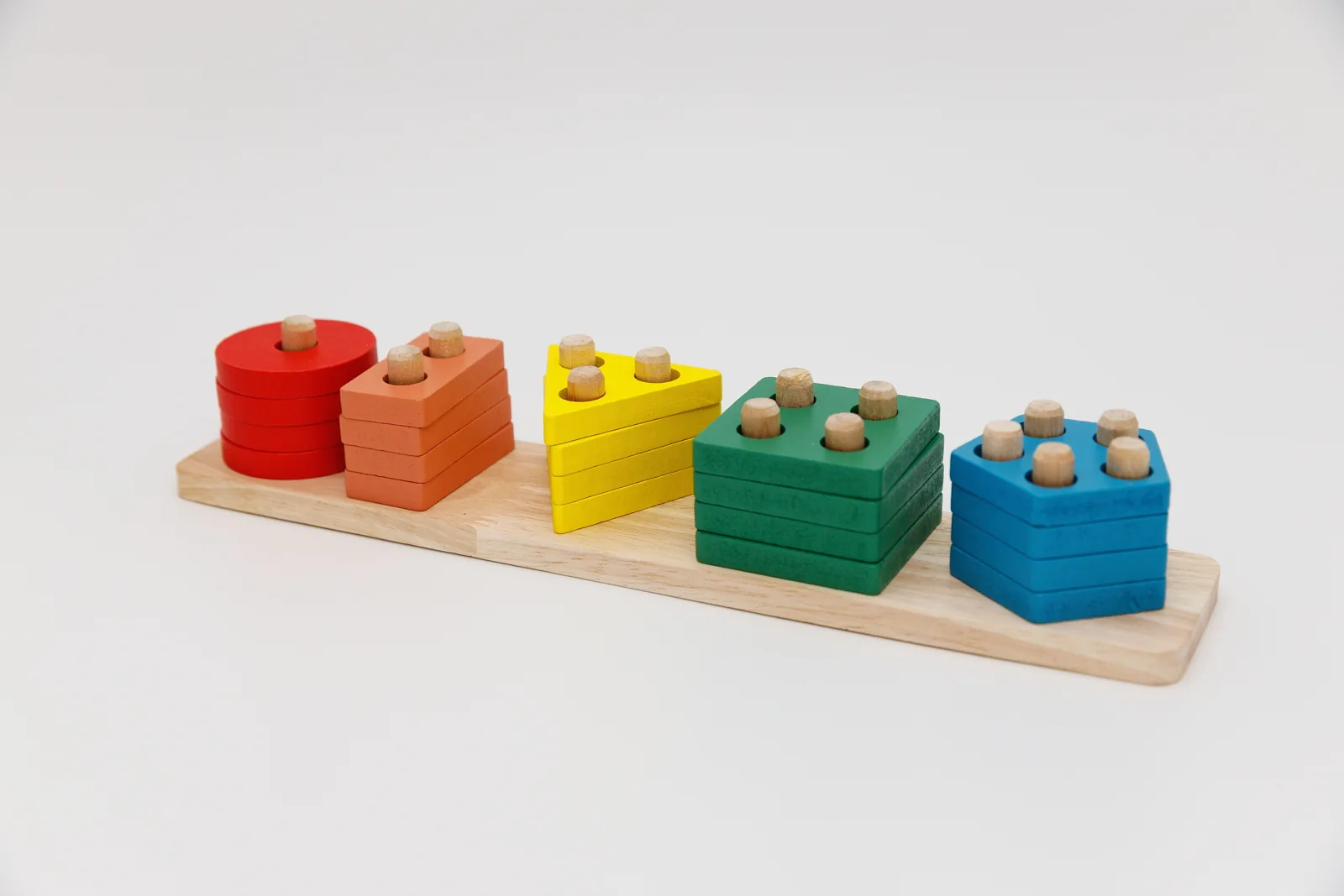
Montessori in preschool: try “a tray i can set up and put away” with support matched to your child. You see a wooden toy labeled Montessori. Yet a material on its own says little about how learning is organized. To understand what research can tell us, it helps to look at the program studied, the children involved and how long they were followed.
At a glance
- Suggested ages: 3–4, 4–5, 5–6 years.
- Materials: A low tray, two large fabric squares and two wide containers the child can handle comfortably.
- Key idea: Place the materials at an accessible height and ask which fabric square your child wants to use first.
Montessori in preschool: what to notice
Lillard and colleagues followed children from admissions processes at US public Montessori schools. They found advantages in reading and some cognitive measures at the end of kindergarten. The study also notes selection and missing-data limitations. Its conclusions concern those school programs, rather than any resource labeled Montessori.
Source: Lillard et al. (2025).
A practical idea with a specific purpose
At home, we can prepare an organized space, offer a limited choice and show how to put materials away. Try these decisions for their usefulness in your routine. The activity below is our own suggestion: it neither recreates a Montessori classroom nor transfers school-study outcomes to the home.
A tray I can set up and put away · setup and steps
You will need: A low tray, two large fabric squares and two wide containers the child can handle comfortably.
- Place the materials at an accessible height and ask which fabric square your child wants to use first.
- Slowly show how to move a fabric square from one container to the other, then leave the materials ready.
- Allow your child to try their own approach. If they ask for help, show just the step they need.
- When finished, put things away together and name one action in Spanish and English.
Words to share
Español: ¿Cuál quieres elegir?
English: Which one would you like to choose?
Español: Vamos a guardarlo.
English: Let’s put it away.
How to adapt it
Make it simpler
Use one fabric square and let the adult steady one container.
Extend the game
Invite your child to prepare the materials for another person and explain the arrangement.
At home
Choose objects you already have and notice whether the arrangement helps participation in the routine.
In the classroom
Explain the activity’s specific goal and adjust support to each child’s independence.
When considering an educational approach, look at the whole setting: adult preparation, relationships and the organization of experiences are also part of the conversation.
Activities to keep exploring


Sources and further reading
- Lillard, A. S., Loeb, D., Berg, J., Escueta, M., Manship, K., Hauser, A., & Daggett, E. D. (2025). A national randomized controlled trial of the impact of public Montessori preschool at the end of kindergarten. Proceedings of the National Academy of Sciences, 122(43), e2506130122. Read the study ↗
These games are Lola & Sam’s own suggestions. Course guides and professional guidance provide educational context; they do not establish the effectiveness of these activities. The cited studies do not evaluate our episodes or materials either.