
Preschool attention: preparing the play space
How to choose what stays in view during an early years activity, with research on distraction and a practical game to try.
Families and teachers
Article by the Lola & Sam team. Sources at the end.
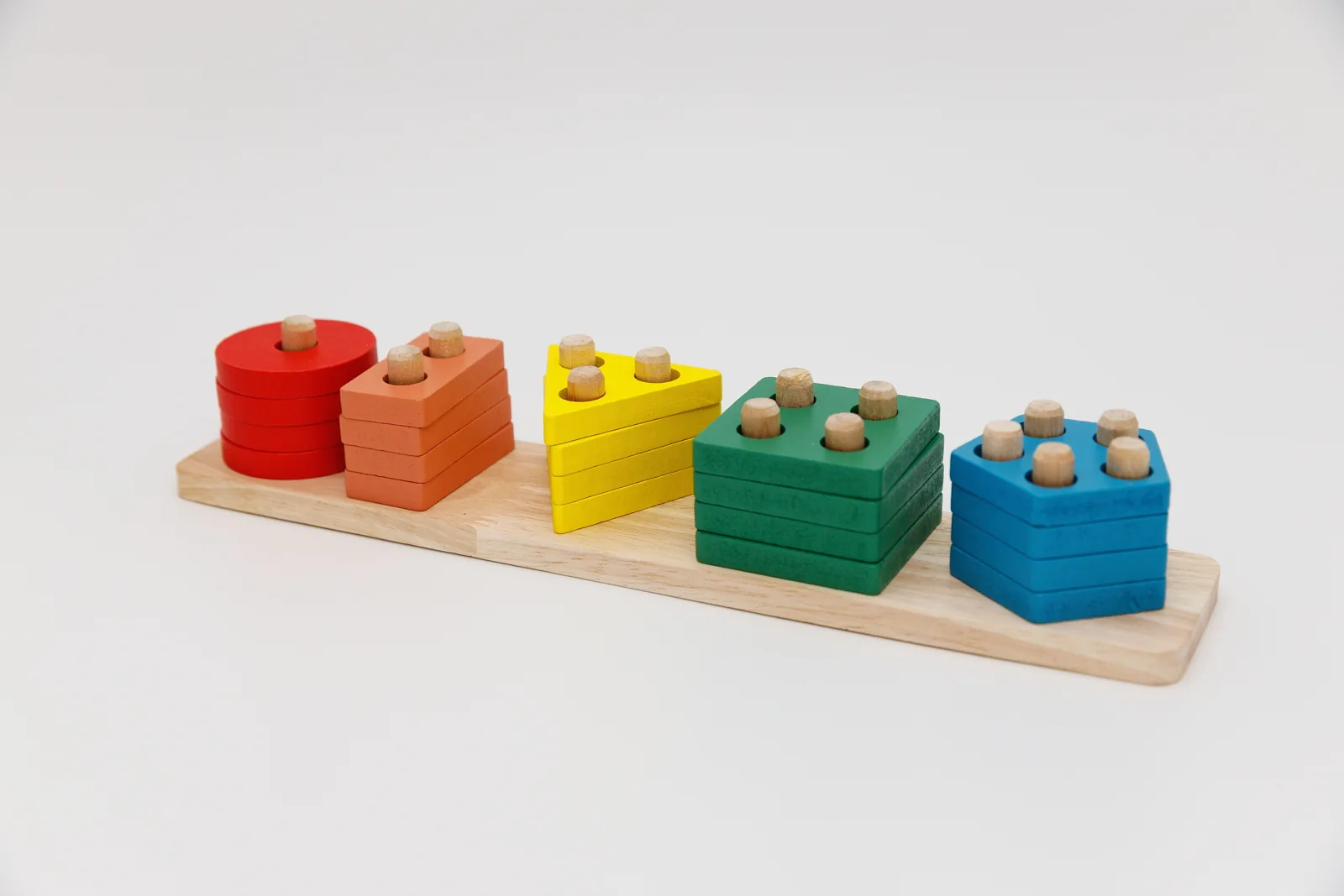
Preschool attention: try “the tray for what we need now” with support matched to your child. The table holds shapes, pencils, an open book and pieces from the previous game. An episode is still playing while you explain what to find. All those materials may be interesting, but right now you only need to compare two shapes. Instead of repeatedly asking for more attention, consider what needs to stay visible for this action and what can wait for its turn.
At a glance
- Suggested ages: 3–4, 4–5, 5–6 years.
- Materials: A plain tray, three pairs of large paper shapes, a box for spare pieces and a shape picture. Avoid small pieces that could be put in the mouth.
- Key idea: Choose two pairs and put the third away. Clear materials belonging to another activity from the surface while retaining any familiar supports the child needs.
Preschool attention: what to notice
In 2014, Fisher, Godwin and Seltman studied six science lessons with kindergarten children in a laboratory classroom. Highly decorated walls were associated with more distraction and smaller learning gains than when decorations were removed. The study did not specifically examine children with ADHD and does not establish that classrooms should be empty.
Source: Fisher, Godwin & Seltman (2014).
Familiarity does not always remove distraction
Godwin and colleagues examined repeated exposure in 2022. They found partial habituation over two weeks in a laboratory classroom, although the environment remained distracting. Across six real classrooms observed for fifteen weeks, they found no evidence of habituation. The different designs and settings cannot establish a universally appropriate amount of decoration.
Source: Godwin et al. (2022).
Choose what helps with this task
Inspired by these research questions, we suggest a practical review of the table. Begin by defining the action: finding a pair, extending a pattern or placing a piece. Keep the example and materials needed for that action. Store the rest nearby in a box accessible to the adult, ready to bring back when the activity changes.
This does not mean removing familiar objects the child needs or hiding communication supports. A visual sequence or an example may be useful even though it adds information to the table. Distinguish between what enables participation and what belongs to another game. Notice how that choice works before reorganising the whole room.
Separate the introduction from hands-on play
With Lola & Sam, introduce a word or shape using a picture or a short part of an episode. Then pause playback and offer a game with objects. This lets you decide when to look at the screen and when to compare pieces. This arrangement is our own suggestion: the cited studies examined classrooms, not this use of videos.
Note whether the child finds the materials, understands where to place them or needs the example shown again. Change one condition at a time, such as putting pencils aside while matching pairs. Use that observation to prepare the next session; it is not a test for diagnosing attention difficulties or comparing children.
The tray for what we need now · setup and steps
You will need: A plain tray, three pairs of large paper shapes, a box for spare pieces and a shape picture. Avoid small pieces that could be put in the mouth.
- Choose two pairs and put the third away. Clear materials belonging to another activity from the surface while retaining any familiar supports the child needs.
- Look at a picture or a short part of the shapes episode. Pause before introducing the pieces on the tray.
- Place one shape as the example and offer the others. Invite the child to find a match and compare edges together if help is needed.
- When a pair is found, put it to one side. Decide together whether to try another, take a break or finish, without automatically adding materials.
- Put the shapes away and bring back the pencils if you would like to draw. Introduce this as a separate activity with its own instruction.
Words to share
Español: ¿Qué necesitamos ahora?
English: What do we need now?
Español: El modelo está aquí.
English: The example is here.
Español: Guardamos las figuras y elegimos otra cosa.
English: Let’s put the shapes away and choose something else.
How to adapt it
Make it simpler
Offer one pair on a surface where its edges are easy to see. Bring the example closer without moving all the objects at once.
Extend the game
Add a similar shape to compare. Keep the space and instruction the same so the new challenge lies in making the choice.
At home
Prepare a portable tray without changing the furniture. Stop other playback and keep a comfortable way to ask for help or finish.
In the classroom
Review materials around the activity without emptying the classroom. Keep necessary supports visible and notice which arrangement works for each group.
Ask what this game needs at this moment. A prepared space can remain welcoming, familiar and flexible, with materials brought out when they have a purpose.
Activities to keep exploring


Sources and further reading
- Fisher, A. V., Godwin, K. E., & Seltman, H. (2014). Visual environment, attention allocation, and learning in young children: When too much of a good thing may be bad. Psychological Science, 25(7), 1362–1370. DOI: 10.1177/0956797614533801. Read the study ↗
- Godwin, K. E., Leroux, A. J., Seltman, H., Scupelli, P., & Fisher, A. V. (2022). Effect of repeated exposure to the visual environment on young children’s attention. Cognitive Science, 46(2), e13093. DOI: 10.1111/cogs.13093. Read the study ↗
These games are Lola & Sam’s own suggestions. Course guides and professional guidance provide educational context; they do not establish the effectiveness of these activities. The cited studies do not evaluate our episodes or materials either.