
Preschool science activities: a toy-car ramp experiment
Use a ramp and a toy car to explore simple questions and talk about what happens when one thing changes.
Families and teachers
Article by the Lola & Sam team. Sources at the end.
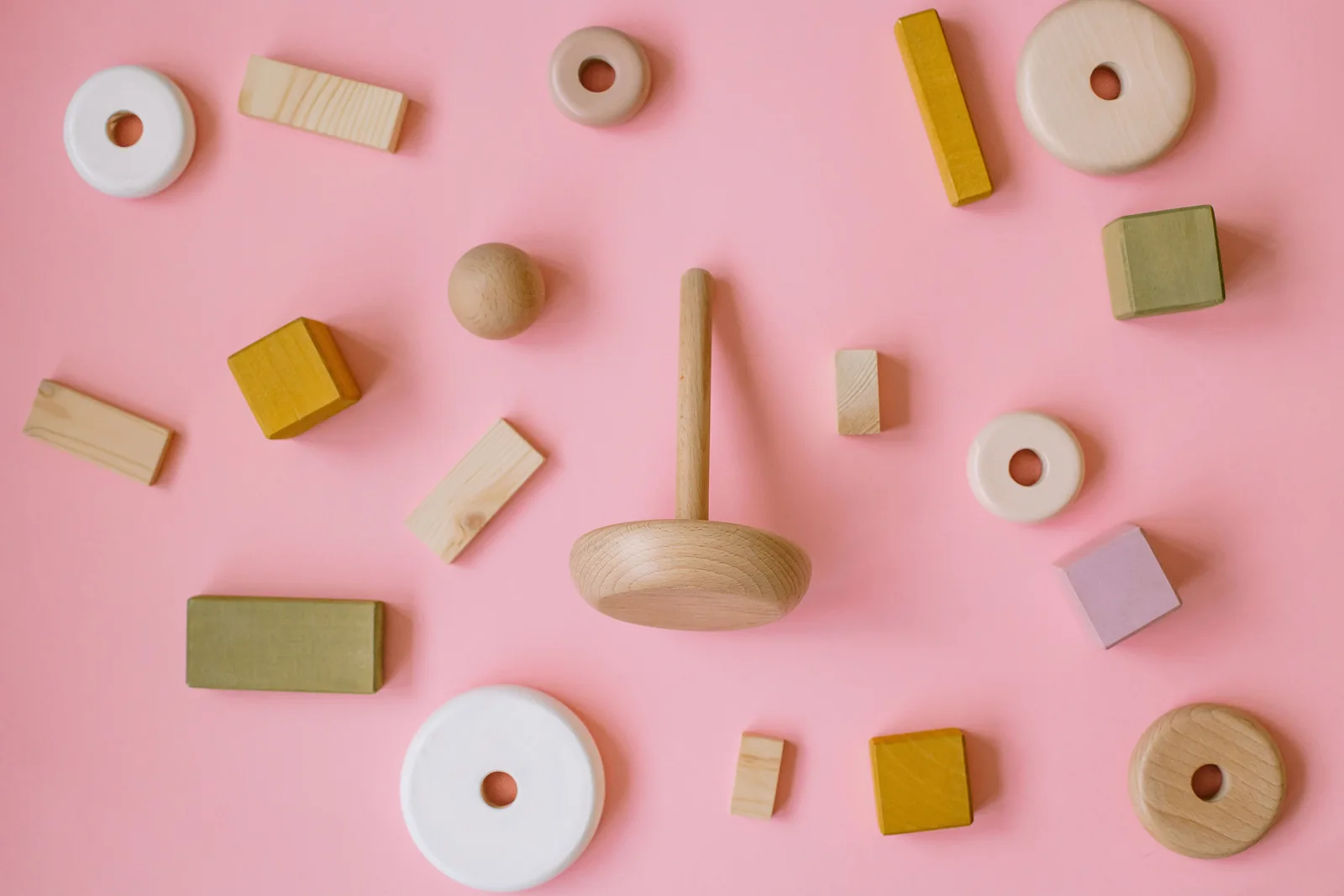
Preschool science activities: try “how far will the car go?” with support matched to your child. A toy car rolls down a board and reaches the rug. Someone lifts the ramp slightly and a question appears: will it reach the same place? This curiosity can become a simple investigation. We do not need a perfect explanation or a worksheet full of answers. Make a prediction, try it under similar conditions and look together at what happened. An adult prepares a safe space and helps keep the question manageable for the child.
At a glance
- Suggested ages: 3–4, 4–5, 5–6 years.
- Materials: A large, age-appropriate toy car, a short smooth board, a broad stable support and large paper markers. An adult sets up and adjusts the ramp.
- Key idea: Set up a low ramp near the floor and clear the landing area. Demonstrate releasing the car from a marker without pushing it.
Preschool science activities: what to notice
Legare and Lombrozo examined how children aged three to six learned about a mechanical toy. Explaining supported causal understanding and generalisation, but did not improve memory for every detail; some younger children remembered causally irrelevant details less well. The study did not use our ramp or episodes. It supports a distinction: explaining how something works is a particular learning purpose, not a guarantee of learning everything about it.
Source: Legare & Lombrozo (2014).
A question we can try out
For our activity, choose one question about a toy car’s journey. Begin with the same ramp and starting point. First let the child explore how it rolls and choose a question that interests them. They can point to a place they think it will reach. Predicting an outcome does not require knowing all the words needed to explain it.
Prepare a low, stable slope close to the floor, with a clear landing area. Use a large, age-appropriate toy car without loose parts, releasing it from a marked starting point rather than throwing it. An adult adjusts the board. If the materials shift or the car rolls into a walkway, stop and rearrange the space before continuing.
Change one thing and look again
Once the journey is familiar, change only the starting height by slightly raising one end of the ramp. Keep the car, surface and release method the same. Repeat the trial to compare outcomes, without requiring the result to match a prediction. If we push once and simply release next time, it becomes harder to decide what made the difference.
After observing, invite the child to describe what happened: “What did we change?” or “How do you think it got there?” Accept a short explanation, a drawing or a demonstration. Repeat an idea in your own words to check you understood it. If you do not know why something happened, say so and consider another trial together.
From vocabulary to a real investigation
A Lola & Sam episode about transport or toys can introduce a car and offer words to begin a conversation. The investigation then happens with real objects and adult support. Use short expressions such as “higher” or “again” in Spanish and English, without also requiring an explanation in a language the child is still getting to know. This activity is our own adaptation, rather than the experiment used in the study.
How far will the car go? · setup and steps
You will need: A large, age-appropriate toy car, a short smooth board, a broad stable support and large paper markers. An adult sets up and adjusts the ramp.
- Set up a low ramp near the floor and clear the landing area. Demonstrate releasing the car from a marker without pushing it.
- Invite the child to point to where they think it will reach. Try it and place a paper marker near its stopping point.
- Repeat from the same place. Compare the stopping points and check that the car was released in a similar way.
- An adult raises the ramp slightly while keeping it stable. Ask what might happen and try again with the same car and surface.
- Talk about what changed and what you noticed. The child can explain, draw or demonstrate with the car before putting the materials away.
Words to share
Español: ¿Qué crees que va a pasar?
English: What do you think will happen?
Español: Vamos a cambiar solo una cosa.
English: Let’s change just one thing.
Español: ¿Cómo podríamos comprobarlo?
English: How could we check?
How to adapt it
Make it simpler
Keep one height and focus on releasing, watching and pointing to the stopping place. Offer a short explanation as a model without asking the child to repeat it.
Extend the game
Draw two setups and record several stopping points for each. Invite another comparison while keeping the other conditions unchanged.
At home
Use a clear area of floor and keep the markers with a drawing of the setup. Return to one question another day without rebuilding the whole activity.
In the classroom
Work with a small group and offer a close view to children who do not want to release the car. Record a prediction and explanation to help plan another investigation.
A useful question leaves room to observe, change an idea and try again. The value of this investigation lies in what we can describe and check together, even when the explanation is still provisional.
Activities to keep exploring


Sources and further reading
- Legare, C. H., & Lombrozo, T. (2014). Selective effects of explanation on learning during early childhood. Journal of Experimental Child Psychology, 126, 198–212. DOI: 10.1016/j.jecp.2014.03.001. Read the study ↗
These games are Lola & Sam’s own suggestions. Course guides and professional guidance provide educational context; they do not establish the effectiveness of these activities. The cited studies do not evaluate our episodes or materials either.