
Preschool sorting and counting: how to get started
One collection can become three games: grouping by a feature, putting things in order and counting.
Families and teachers
Article by the Lola & Sam team. Sources at the end.
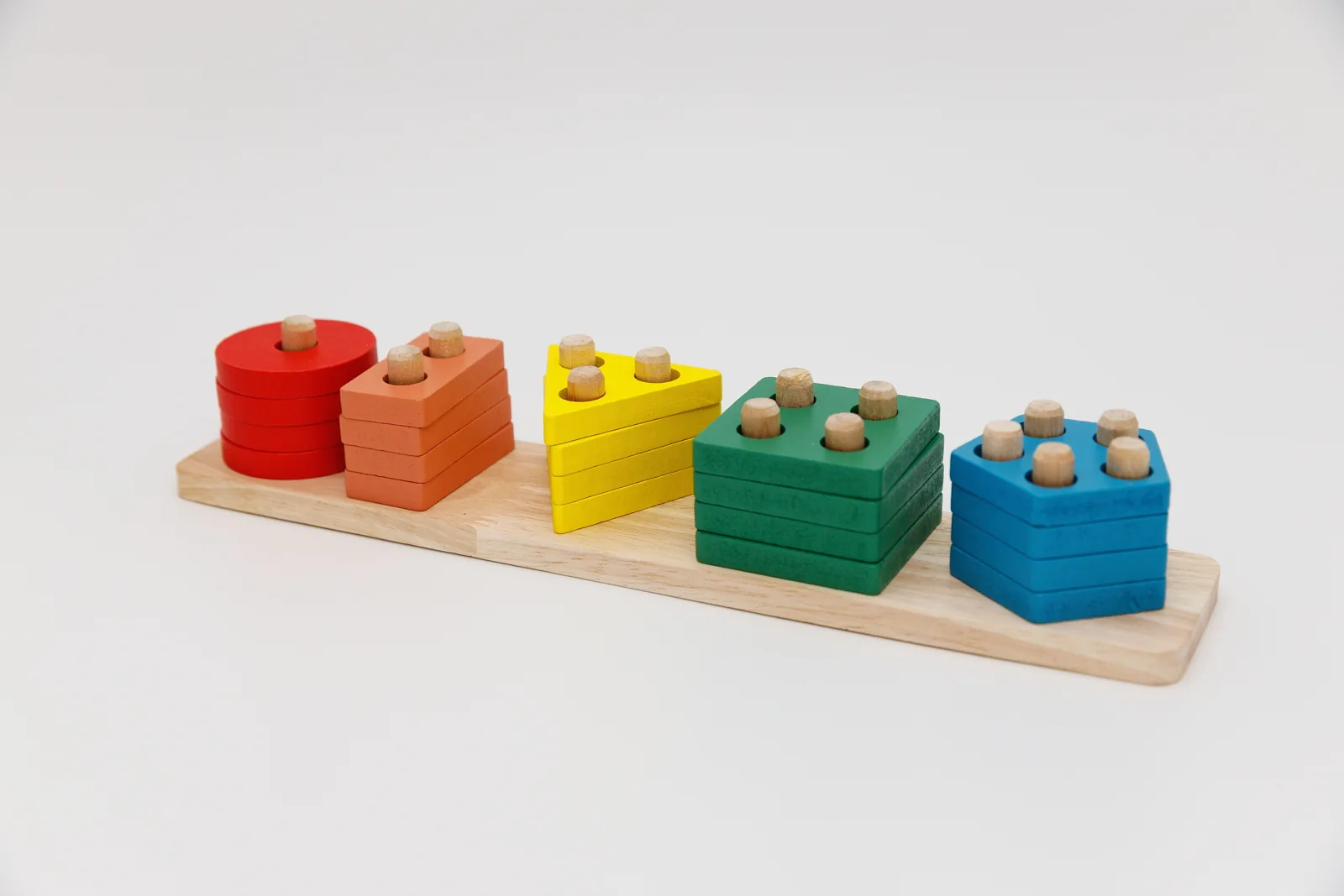
Preschool sorting and counting: try “one basket, three questions” with support matched to your child. Six fruit cards are on the table. “Put the red ones together,” “arrange these from smallest to largest” and “how many are there?” sound similar, but invite different actions. Colors, fruit and numbers provide themes for short challenges with one question changed at a time. This helps the adult keep the purpose clear and listen to how the child approaches it.
At a glance
- Suggested ages: 3–4, 4–5, 5–6 years.
- Materials: Large fruit or color cards, three pictures of the same object in different sizes and two sheets to mark out groups.
- Key idea: Suggest grouping cards that share a color. Ask how your child decided where each one belongs.
Preschool sorting and counting: what to notice
UNIR’s mathematics guide distinguishes classification, seriation and counting. Classification might mean grouping cards by color. Seriation might mean arranging three shapes by size. Counting involves coordinating number words with the items in a collection and answering how many there are altogether.
Choose materials that make the difference visible. To order by size, use pictures of the same fruit in different sizes. Comparing a grape picture with a watermelon picture can raise questions about real size versus picture size. Explain what you are comparing.
Source: UNIR · Desarrollo del Pensamiento Matemático en Educación Infantil.
Change the challenge without changing everything
Keep the objects and change the question. Notice whether your child looks for similarities, compares two items or moves each card while counting. If their rule changes, ask them to show you: they may have found another grouping that also makes sense.
Use both languages on different turns: count one collection in Spanish and another in English, or reverse the order. Stay in one language during each count so it is easy to follow. If your child is concentrating on arranging the objects, you can supply the words.
Source: UNIR · Desarrollo del Pensamiento Matemático en Educación Infantil.
One basket, three questions · setup and steps
You will need: Large fruit or color cards, three pictures of the same object in different sizes and two sheets to mark out groups.
- Suggest grouping cards that share a color. Ask how your child decided where each one belongs.
- Put those cards aside and offer the three pictures in different sizes. Arrange them from smallest to largest.
- Choose a small collection. Count by moving each card once, then ask how many there are altogether.
- Let your child invent a question for you. On another turn, return to the game in the other language.
Words to share
Español: ¿Qué tienen en común?
English: What do they have in common?
Español: ¿Cuántas hay en total?
English: How many are there altogether?
How to adapt it
Make it simpler
Use two clearly different groups and count only as many items as your child can comfortably keep track of.
Extend the game
Change the grouping rule or count again after spreading the cards apart. Talk about what happened.
At home
Group large socks by color and arrange three containers by size.
In the classroom
Give each station one instruction and allow children to explain a rule by arranging objects, pointing or speaking.
You can finish after just one question. Returning to the same materials with another purpose creates a new conversation without turning all three games into a checklist.
Activities to keep exploring
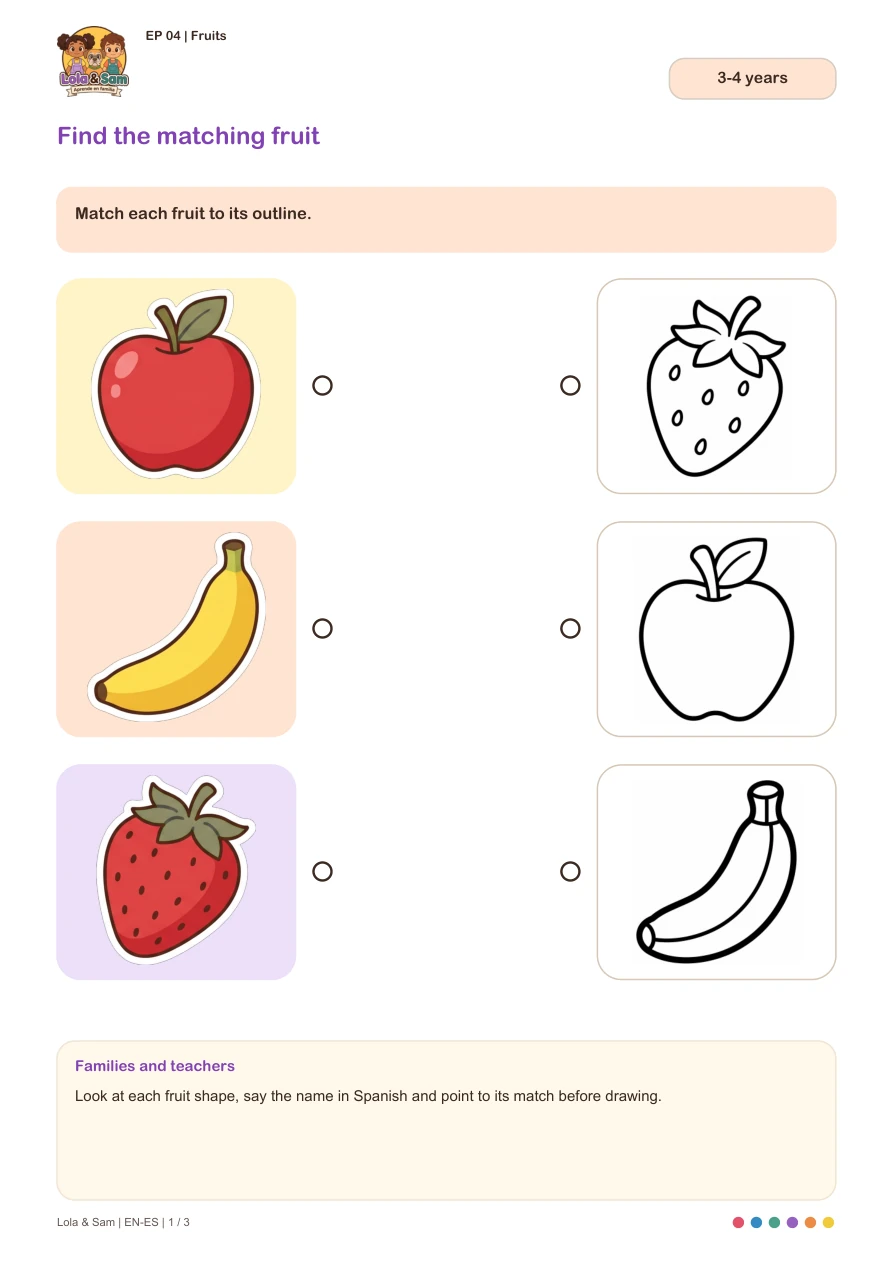

Sources and further reading
- Universidad Internacional de La Rioja (UNIR). Desarrollo del Pensamiento Matemático en Educación Infantil. Public course guide for the Degree in Early Childhood Education. Accessed November 16, 2026. Read the course guide ↗
These games are Lola & Sam’s own suggestions. Course guides and professional guidance provide educational context; they do not establish the effectiveness of these activities. The cited studies do not evaluate our episodes or materials either.