
Visual schedules for preschool: a simple activity sequence
A picture sequence to show what comes next, offer support and make the end of an activity clear, adapted to each child.
Families and teachers
Article by the Lola & Sam team. Sources at the end.
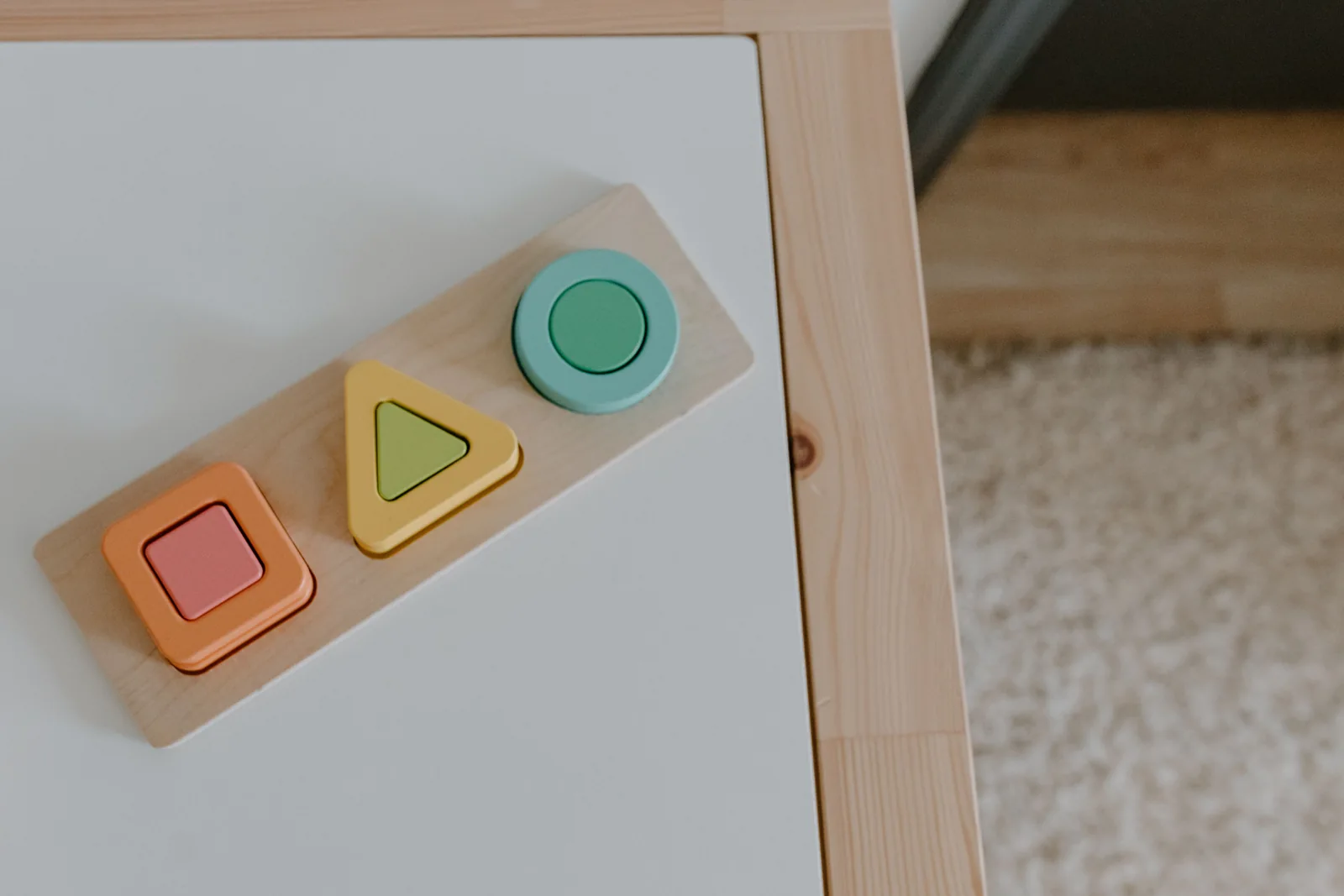
Visual schedules for preschool: try “our shape game sequence” with support matched to your child. You say, “We’ll watch the shapes and then play a game,” but the child may not know what “then” means here. Will they draw, speak or look for something? A visible sequence can show the route before starting. In this activity, we make a simple strip to support an activity with Lola & Sam, adjusting it to what the child understands rather than assuming everyone interprets the same pictures.
At a glance
- Suggested ages: 3–4, 4–5, 5–6 years.
- Materials: Two pairs of large shapes, a tray and three cards representing looking, matching and finishing. Use your own photographs or familiar drawings.
- Key idea: Show the cards and demonstrate the actions. Check whether their pictures help explain what you are going to do.
Visual schedules for preschool: what to notice
The 2020 NCAEP report by Steinbrenner and colleagues includes visual supports among evidence-based practices for autistic learners, including preschool children. These include schedules, sequences and other concrete cues. This evidence does not establish that every symbol suits every child, nor does it validate our episodes.
Source: Steinbrenner et al. / NCAEP (2020).
Choose pictures that mean something
For our activity, use photographs of the actual materials, simple drawings or the objects themselves. Try one picture before preparing the full sequence: show it alongside what it represents and notice whether it helps identify the action. If it is unclear, change the representation. The aim is to communicate a step, rather than teach a whole new set of symbols.
A photograph of the shapes can represent “find a pair.” For “finished,” a familiar tray may be more meaningful than an abstract symbol. Demonstrate the meaning briefly. If the child uses a communication system, retain familiar supports and agree any changes with the people supporting them.
Show the route without making it compulsory
We suggest beginning with two actions and a finishing cue: look at a picture, place a pair and put the materials away. Indicate the current step and move its card when it is finished. Keep an accessible way to ask for help, a break or an end to the activity, using words, gestures or other supports the child understands.
If the plan changes, show the change before moving on whenever possible. If a card does not help, there is no need to insist that the child look at it or touch it. Bring the object closer, demonstrate the action or simplify the sequence. The strip is there to clarify events, not measure compliance or require eye contact.
Support an episode in one or two languages
Select a picture or a short part of the shapes episode and prepare the shapes you will use afterwards. Introduce the instruction in the more familiar language and offer a word in the language being learned when appropriate. Avoid changing the pictures, rules and all the vocabulary at once; choose what you want to practise on this occasion.
The following activity is our own suggestion for home or class and can be reviewed with professionals who know the child. Familiar characters do not turn a picture sequence into a specialist intervention. Autistic people do not all need the same supports; begin with the child’s preferences and ways of communicating.
Our shape game sequence · setup and steps
You will need: Two pairs of large shapes, a tray and three cards representing looking, matching and finishing. Use your own photographs or familiar drawings.
- Show the cards and demonstrate the actions. Check whether their pictures help explain what you are going to do.
- Indicate the first card and look at a shape picture together. Use a picture from the episode or one you have drawn.
- Move to the matching card. Offer a shape and its match, keeping the others aside if they add difficulty.
- After placing the pair, ask whether the child would like another, help or to finish. Adjust the sequence to their response and show the change.
- When finishing, show the final card and put the pieces away with as much help as needed. Make it clear what has ended.
Words to share
Español: Ahora buscamos una pareja.
English: Now we find a pair.
Español: Puedes pedir ayuda.
English: You can ask for help.
Español: El juego ha terminado.
English: The game is finished.
How to adapt it
Make it simpler
Use two real objects instead of three cards. Show the game materials first and then the tray where they will be put away.
Extend the game
Invite the child to prepare a familiar sequence with you. Introduce one small change and show how it will appear on the strip.
At home
Keep the sequence with its materials for another occasion. If using photographs, avoid personal information or images you would not want shared.
In the classroom
Combine the group sequence with individual supports where needed. Agree meaningful representations with the family and support team.
A useful sequence helps this child understand this activity. Keep it, change it or put it aside according to how helpful it is, without making it a requirement for play.
Activities to keep exploring


Sources and further reading
- Steinbrenner, J. R., Hume, K., Odom, S. L., Morin, K. L., Nowell, S. W., Tomaszewski, B., Szendrey, S., McIntyre, N. S., Yücesoy-Özkan, Ş., & Savage, M. N. (2020). Evidence-based practices for children, youth, and young adults with Autism. University of North Carolina at Chapel Hill, Frank Porter Graham Child Development Institute, National Clearinghouse on Autism Evidence and Practice Review Team. Read the study ↗
These games are Lola & Sam’s own suggestions. Course guides and professional guidance provide educational context; they do not establish the effectiveness of these activities. The cited studies do not evaluate our episodes or materials either.